Select your language


Staro Nagorichane: A Byzantine Masterpiece in Stone and Fresco

STARO NAGORICHANE COLLECTION:
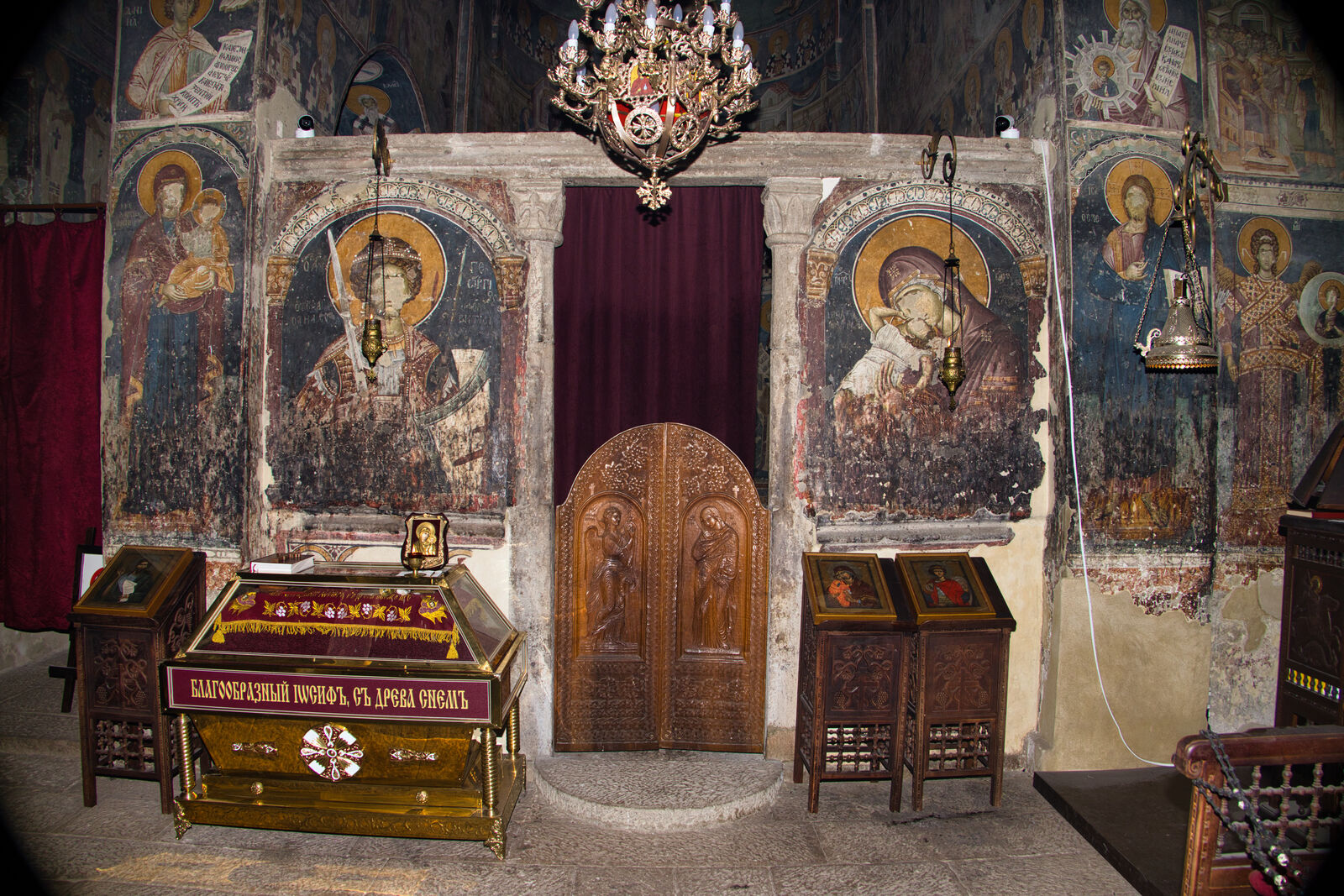
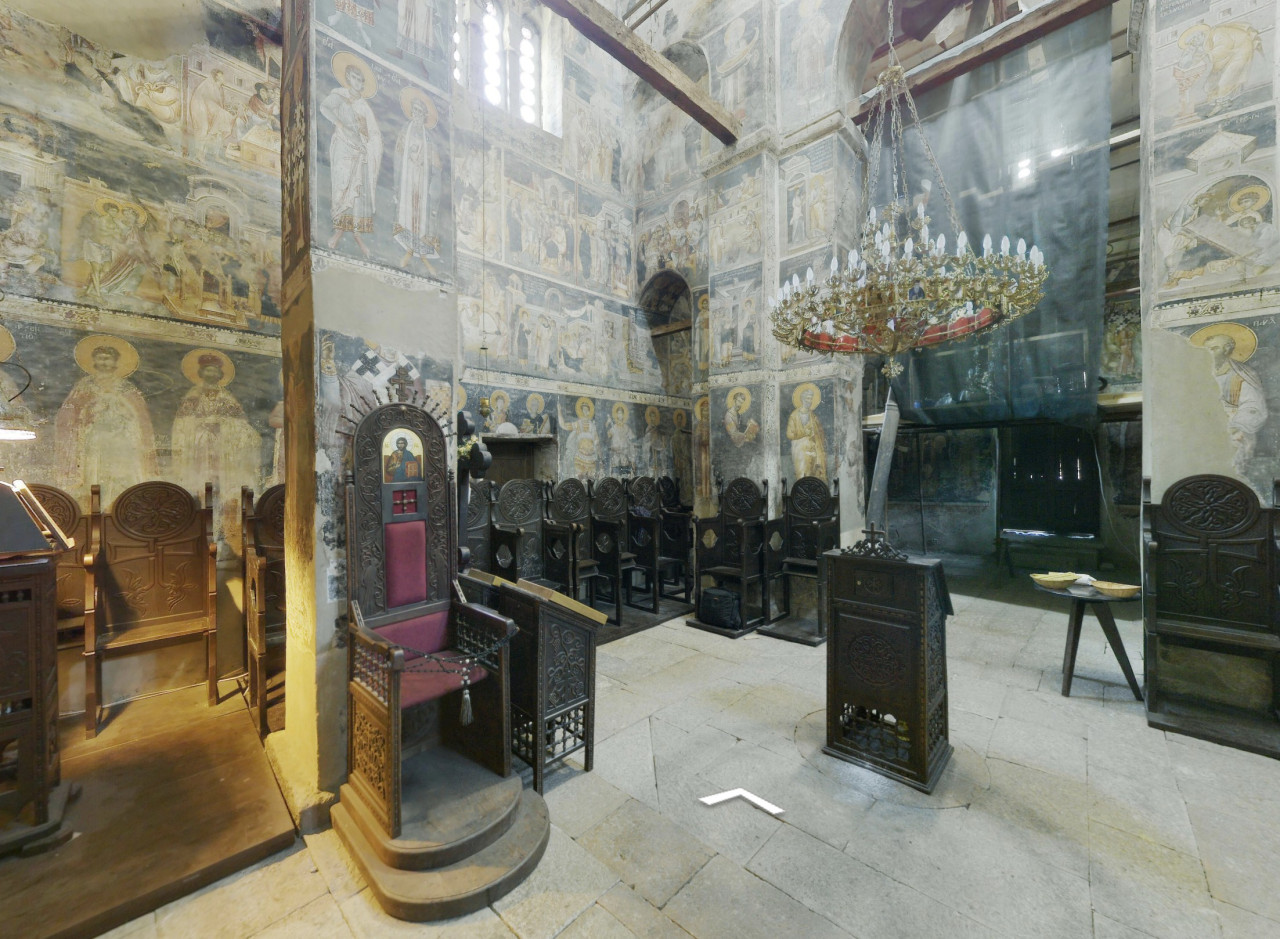
The Church of Saint George in the village of Staro Nagoričino, located ten kilometers east of Kumanovo in North Macedonia, is a site rich in history and art. Its origins are linked to a fascinating 11th-century legend, which attributes the construction of the first church to the Byzantine Emperor Romanos IV Diogenes (1068–1071). According to the legend, following a hunting incident involving a wounded deer, Diogenes encountered the hermit Saint Prohor of Pčinja, who prophesied his ascent to the imperial throne. In gratitude for the fulfillment of this prophecy, Diogenes reportedly erected the original Church of Saint George. Although the full appearance of this early structure remains unclear, the surviving masonry suggests a rectangular building with a semicircular apse, constructed from carefully hewn stone. However, the current monumental church is primarily the result of a major reconstruction carried out between 1312 and 1318 by King Milutin (1282–1321).
King Milutin’s architect constructed a new church atop the well-preserved walls of an 11th-century structure, which remained standing to a height of six meters. While the original building utilized carefully hewn stone, the 14th-century additions incorporated a combination of stone and brick, joined by thick mortar beds. The architect opted for a five-domed design, drawing inspiration from the Byzantine architecture of the period—specifically from notable examples in Thessaloniki, such as the churches of Saint Catherine and the Holy Apostles. The design also reflects a significant influence from the Church of the Virgin Ljeviška in Prizren. Key architectural features include elongated cross arms that extend to the facades—giving the exterior the appearance of an inscribed cross—and small corner domes integrated with the longitudinal vaults. The architect skillfully avoided plain facades, opting instead for a variety of elements such as pilasters, archivolts, and decorative brickwork, featuring patterns like the dovetail, herringbone, and meander.
The magnificent frescoes in the church date back to 1317/1318. These masterpieces are confidently attributed to the renowned workshop of the artist Michael Astrapas, who is considered one of the most distinguished painters of the 14th century. His signature has been found in several places within the church—including his name on the shield of a warrior saint, and his signature, accompanied by the year 1316/17, on the vestments of another saint. An inscription on the western wall of the narthex confirms that the painting process was completed in 1317/1318. His artistic expression embodies the "new classicism" of the Palaiologan style, characterized by smooth forms, rich color relationships, varied modeling, and confident draftsmanship. His body of work also includes other significant commissions, such as the Church of the Virgin Peribleptos in Ohrid (1294/5), the Church of the Virgin Ljeviška in Prizren (1306/7), and the King’s Church at the Studenica Monastery (1313/14).
The iconographic program is extensive, featuring cycles of the Life of Christ and Saint George in the naos, the Life of the Virgin Mary in the proskomedia, and the Life of Saint Nicholas in the diakonikon, while a menologion adorns the narthex. A particularly interesting feature is the "ktetor’s portrait" (founder’s portrait) on the northern wall of the narthex, which depicts King Milutin holding a model of the church, alongside his wife, Queen Simonida. They are accompanied by Saints Constantine and Helena, as well as Saint George, who is shown handing a sword to King Milutin. This specific gesture is considered a reference to Milutin’s military victory over the Turks in Asia Minor in 1313.
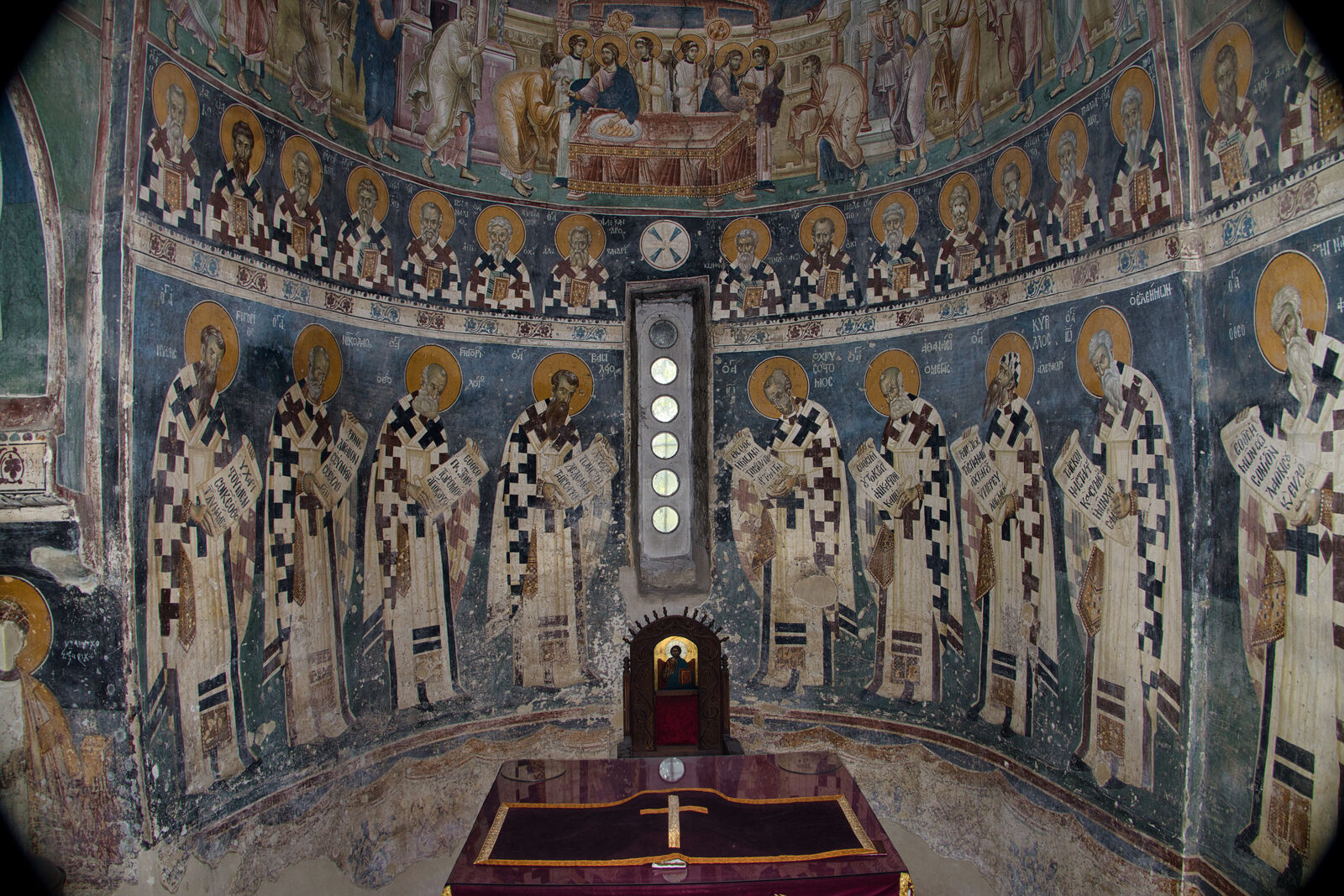
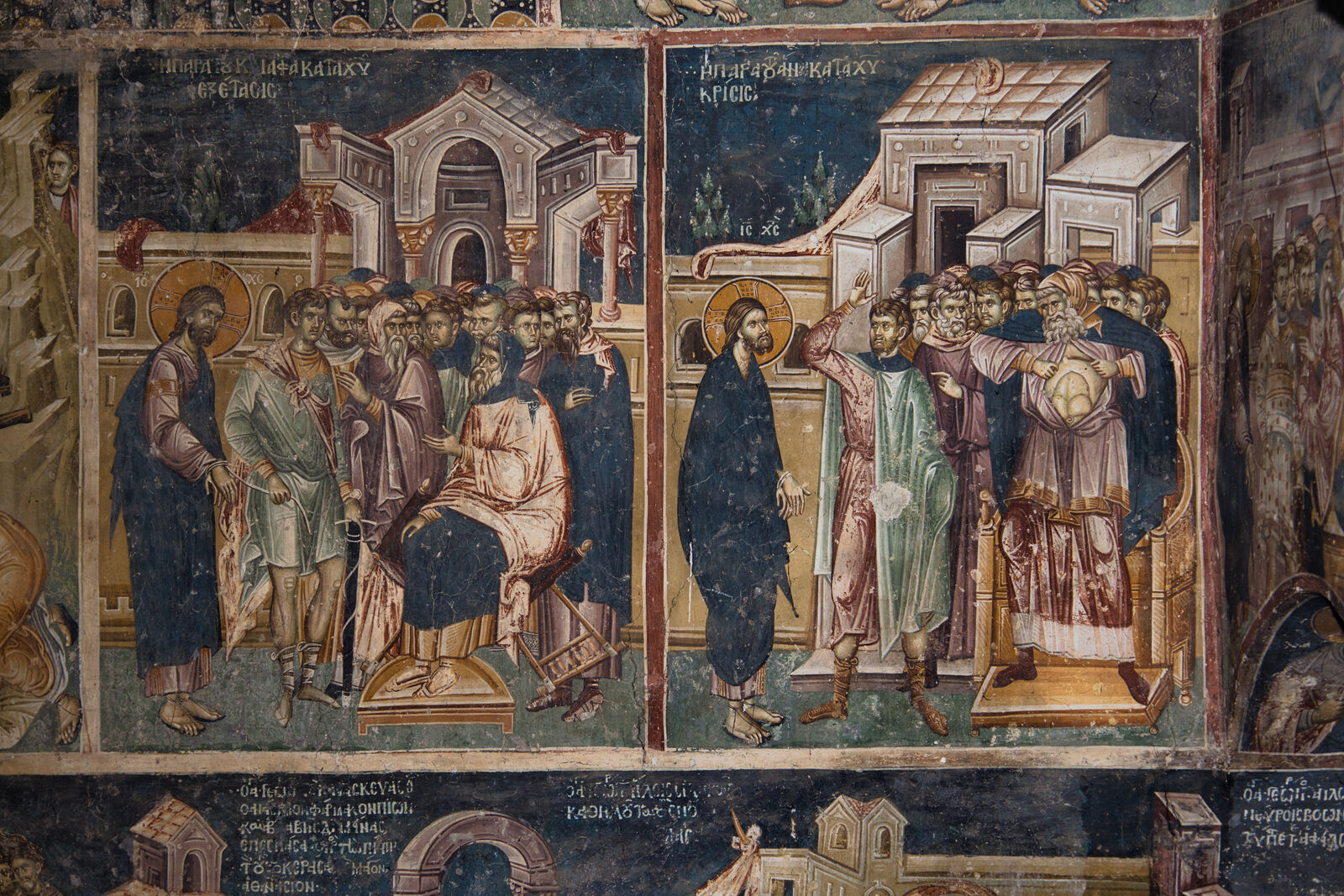
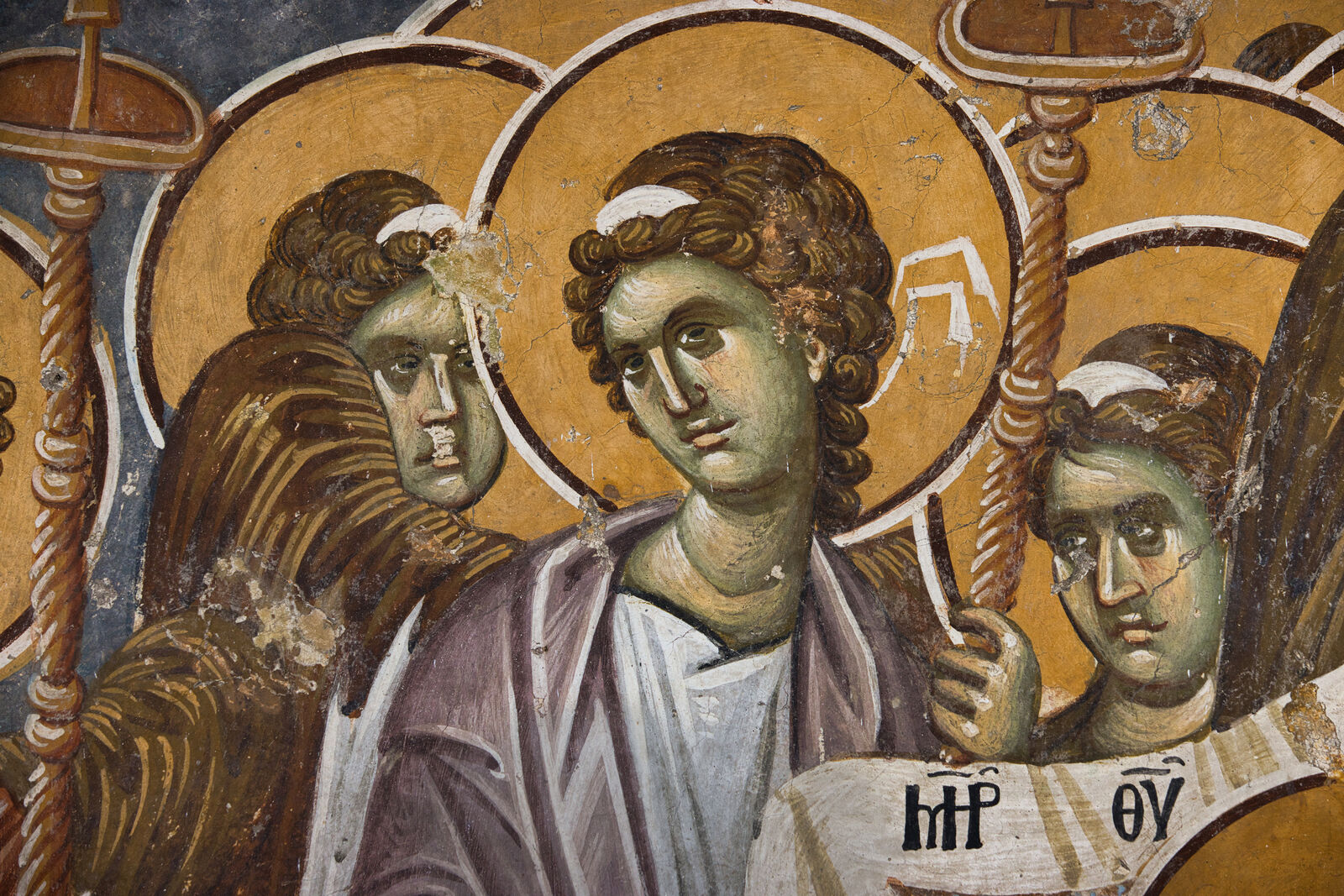
Staro Nagorichane is recognized as a cultural heritage site of the highest category and a masterpiece of 14th-century Byzantine classicism.
The church is under the jurisdiction of the Macedonian Orthodox Church - Archbishopric of Ohrid.
The BLAGO Team visited Staro Nagorichane in June of 2025. Due to restoration work on the narthex area, only the nave and sanctuary collections are currently available in the monastery archives. Thanks to the experts of the Macedonian Institute for the Protection of Cultural Monuments, the sanctuary and nave of the church were restored through projects in the last few years.
More Information
BLAGO Content
All BLAGO material is free to use, but there are certain rules for commercial use, as well as rules for citing the source of the material. See the following links for more information.
BLAGO also accepts material for its collection. Please contact us if you have any.
Contact
BLAGO Fund, Inc.
PO Box 60524
Palo Alto, CA 94306
USA
info@blagofund.org