Select your language



DONJA KAMENICA
COLLECTION:
Church of the Mother of God, Donja Kamenica
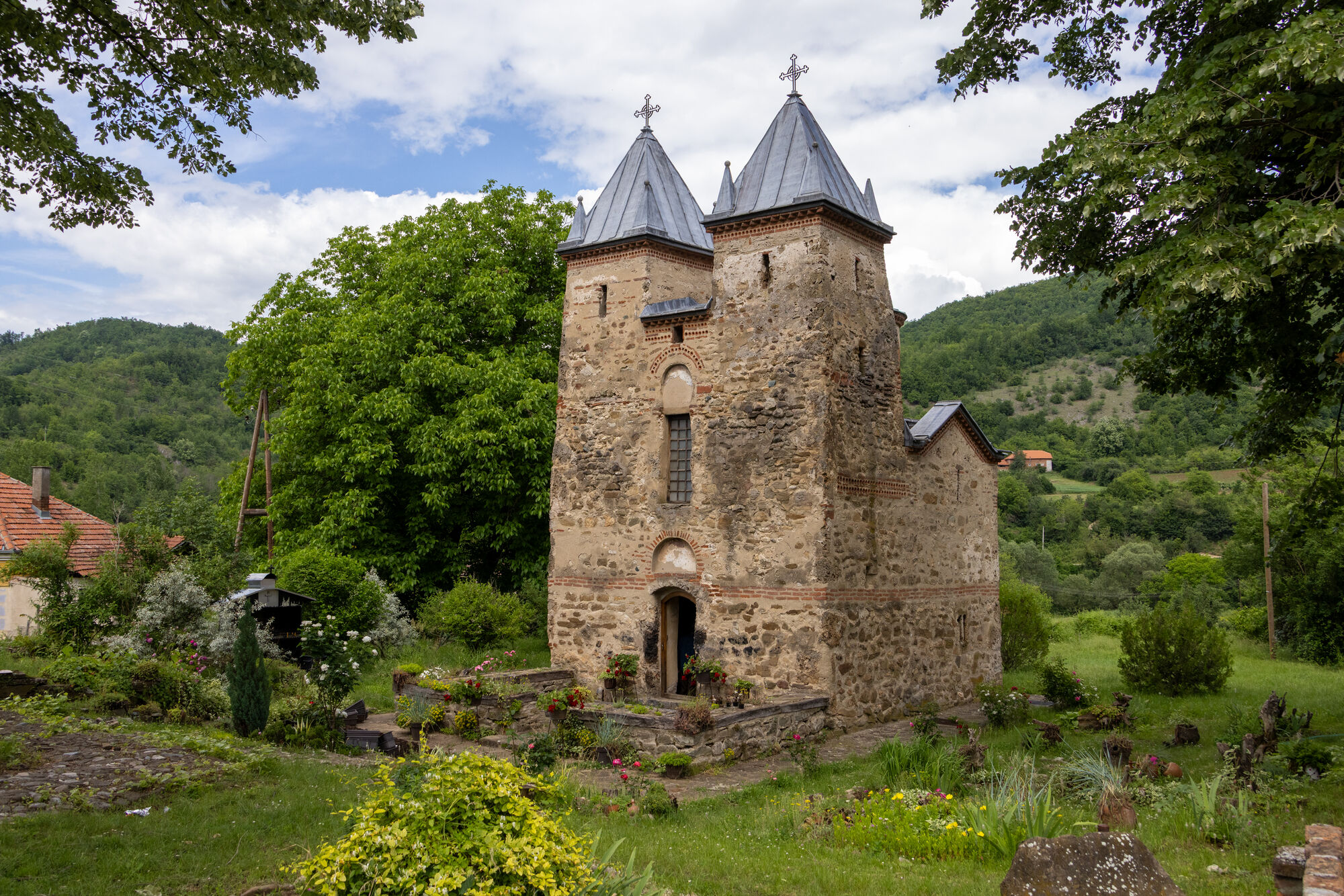
The Church of the Mother of God is situated in the center of the village of Donja Kamenica, located 11 kilometers southeast of Knjaževac on the road to Pirot, in eastern Serbia. It was likely built by an anonymous nobleman from the Bulgarian principality of Vidin. Historical evidence, specifically a portrait of "despot Michael... son of the tzar Michael," suggests the church and its paintings date to the first quarter of the 14th century, as Michael died in 1330. However, some stylistic and iconographic features lead other scholars to propose a date in the second half of the 14th century. Despite the lack of surviving historical documents, the church stands as a significant example of a private nobleman's foundation in the medieval Balkan borderlands.
The architecture of the church is highly unusual and distinctive for its small scale. It follows an irregular cross-shaped interior plan with a small dome over the naos and a narrow, two-story narthex. Its most striking characteristic is two prominent towers rising above the narthex, which define its unique exterior silhouette. Archaeological findings also suggest that a wooden porch or vestibule once preceded the entrance, an uncommon feature that has since been reconstructed in architectural studies.
The fresco paintings are celebrated for their rich and sometimes rare iconographic details. In the naos, the program includes traditional cycles such as the Great Feasts and the Passion of Christ, as well as unique "fresco-icons" painted directly onto the southern wall, including the Virgin Gorgoepikoos and St. George Diasoritis. The ground floor of the narthex focuses on the Life of the Virgin, the church's patroness, while the upper floor contains cycles dedicated to St. Nicholas and St. Paraskeva. Stylistically, the lead master blended the slim, elegant forms of the Palaeologan Renaissance with dramatic 13th-century inspirations, particularly evident in the emotional intensity of the Lamentation scene.
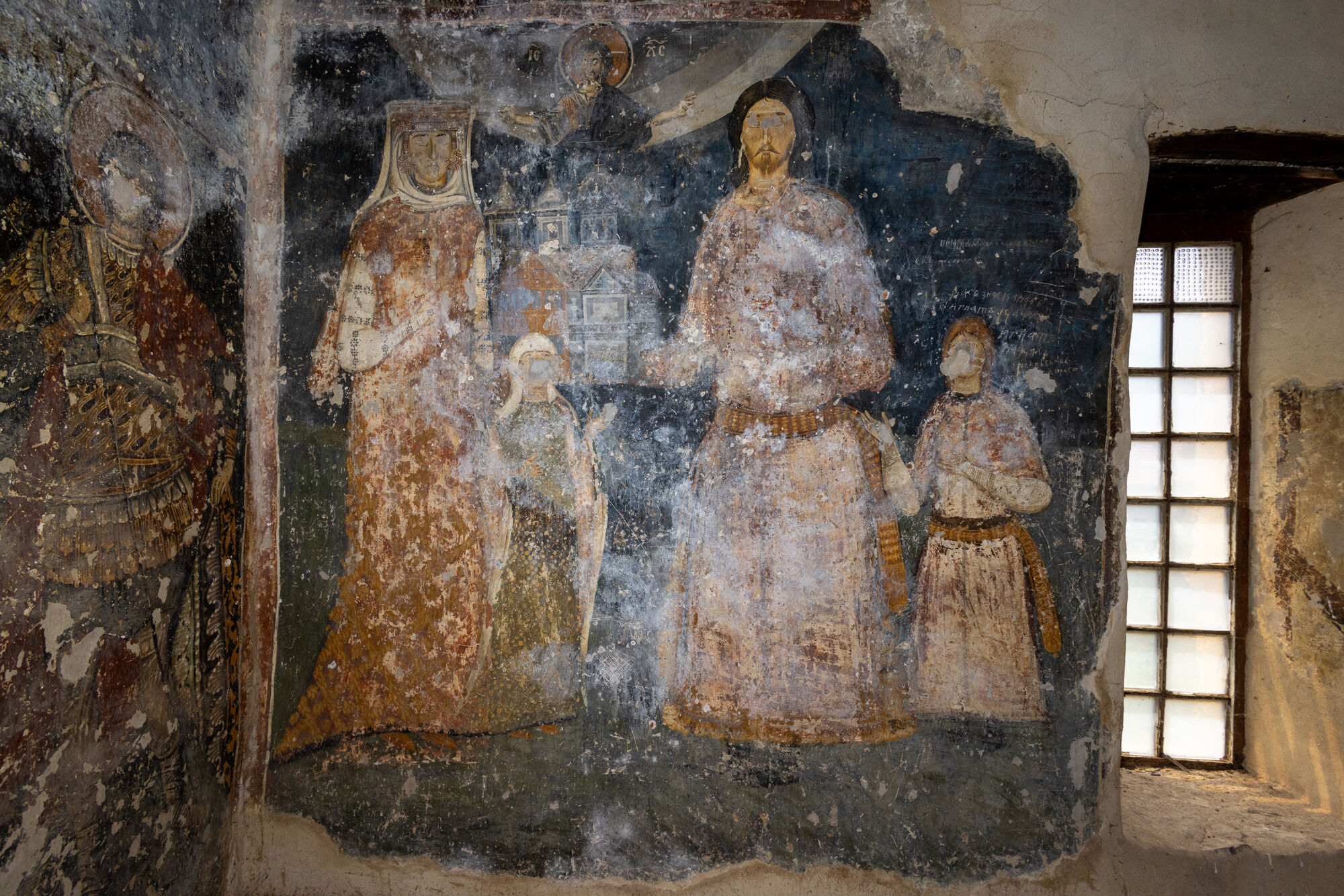
Among the most historically significant frescoes are the ktitor (founder) portraits located on the upper floor of the narthex. These compositions depict the nobleman founder alongside his wife, children, and a brother, as well as the figures of despot Michael and his wife Helena. These portraits provide an invaluable record of medieval fashion, jewelry, and social hierarchy, offering a precise look at the attire worn by the 14th-century nobility. While many of the original inscriptions have been lost, the surviving imagery continues to offer deep insight into the artistic and religious life of the era.
More Information
BLAGO Content
All BLAGO material is free to use, but there are certain rules for commercial use, as well as rules for citing the source of the material. See the following links for more information.
BLAGO also accepts material for its collection. Please contact us if you have any.
Contact
BLAGO Fund, Inc.
PO Box 60524
Palo Alto, CA 94306
USA
info@blagofund.org