Select your language



KREPIČEVAC
COLLECTION:
Monastery Krepičevac
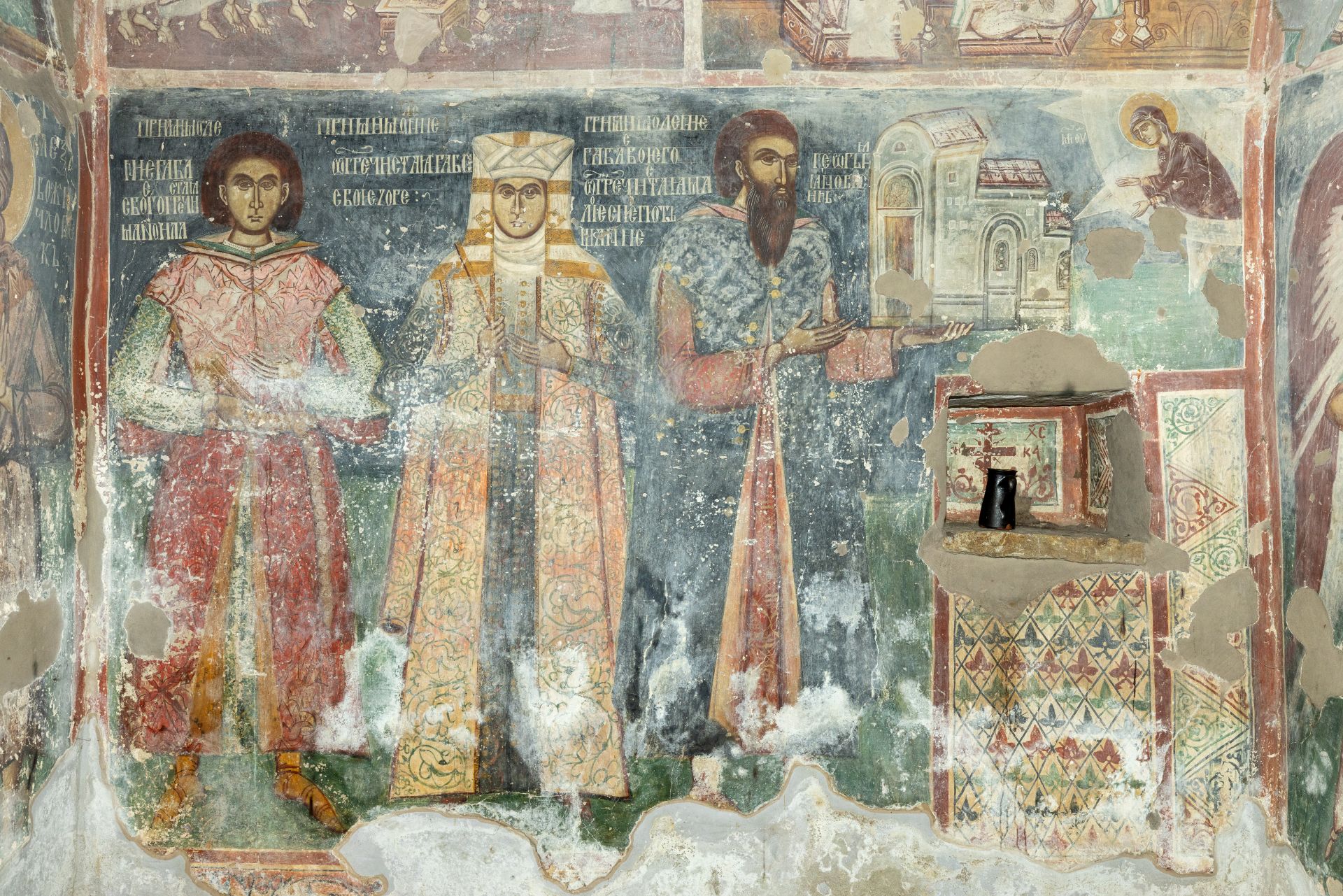
The Monastery of Krepičevac lies at the foot of the Kučaj Mountains, north of Jablanica village, in the gorge of the Radovanjska River. Its church, dedicated to the Dormition of the Theotokos, was built on an older sacred site at the end of the 15th or beginning of the 16th century and is recorded in Ottoman tax registers by 1531. The founders belonged to a respected Christian family permitted by Ottoman authorities to build and paint the church. A donor inscription survives on the northern wall of the narthex, depicting Georgije, son of Jan, with his wife Zora and son Manojlo offering a model of the church to the Theotokos. After early mentions, the monastery disappears from records until 1761, when a large wooden cross and iconostasis doors were donated. Marginal notes in books indicate monastic presence, though the monastery has not been active in recent decades.
.

Mountain RTANJ
Rtanj Mountain (in the clouds during our visit) in eastern Serbia is known for its striking pyramidal shape and the rich biodiversity that covers its slopes. Many visitors are drawn to its highest peak, Šiljak, which offers expansive views and a sense of quiet, untouched wilderness. For more information on the mountain Rtanj, visit the Wikipedia page.
The church, dedicated to the Dormition of the Most Holy Mother of God, was built at an old cult site in the late fifteenth or early sixteenth century and is already recorded in Ottoman tax registers by 1531. The founders belonged to a respected Christian family permitted by Ottoman authorities to construct and paint the church. A partially preserved inscription reveals the dedication, while the north wall of the narthex preserves the full donor composition with legible names.
The ktetor Georgije, son of Jan, together with his wife Zora and their son Manojlo, offers a model of the church to the Mother of God. After this early period, there are no mentions of the monastery in the written sources until 1761, when records note the donation of a large wooden cross and iconostasis doors. Marginal inscriptions in manuscripts attest to monastic presence, although the monastery has not been active in recent decades.

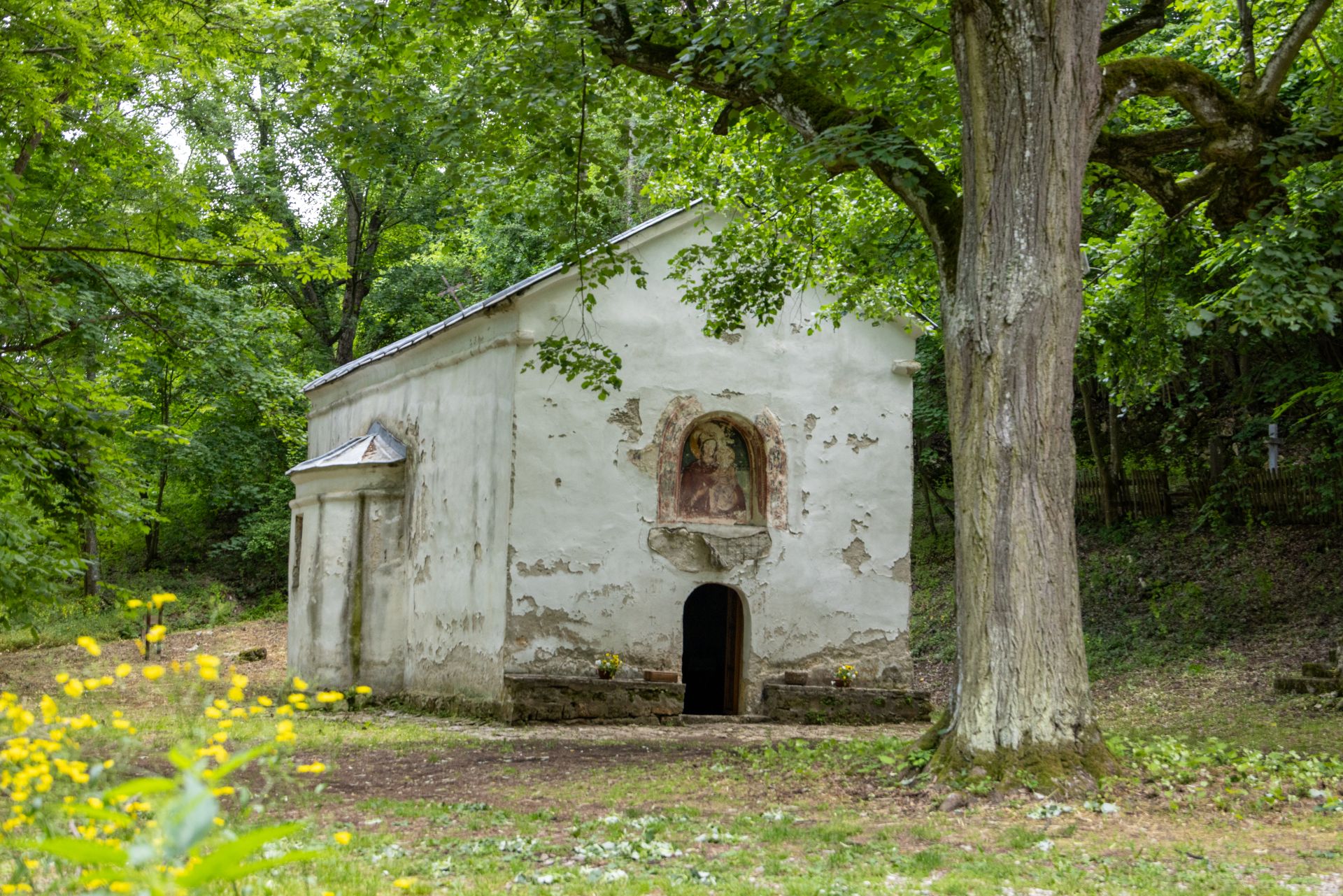
The church of Krepičevac is built on a triconch plan with a western narthex, covered by a barrel vault underneath a single gabled roof. Acoustic ceramic vessels are embedded in the walls, and above the arched western entrance stands a large lunette depicting the Mother of God with Christ. The choir conches are set unusually far from the altar apse, creating a spacious eastern bay that accommodates a built altar screen with three arched openings and an arcosolium containing the tomb of Elder Josif, one of the Sinai monks of the late fourteenth century.
Fresco decoration is partially preserved: in the narthex are Christ Pantokrator, the Heavenly Liturgy, the donor portrait, and a Deësis; additional scenes include the Nativity of the Mother of God, compositions from the Akathist, and depictions of hermits and great schema monks. Fragmentary frescoes survive in the naos, including hierarchs, the Transfiguration, the Dormition, Pilate’s Judgment, and Saints Constantine and Helena. The altar screen once carried a full painted program, now preserved only in fragments. Conservation work was carried out between 1968 and 1974.

More Information
BLAGO Content
All BLAGO material is free to use, but there are certain rules for commercial use, as well as rules for citing the source of the material. See the following links for more information.
BLAGO also accepts material for its collection. Please contact us if you have any.
Contact
BLAGO Fund, Inc.
PO Box 60524
Palo Alto, CA 94306
USA
info@blagofund.org